At a glance
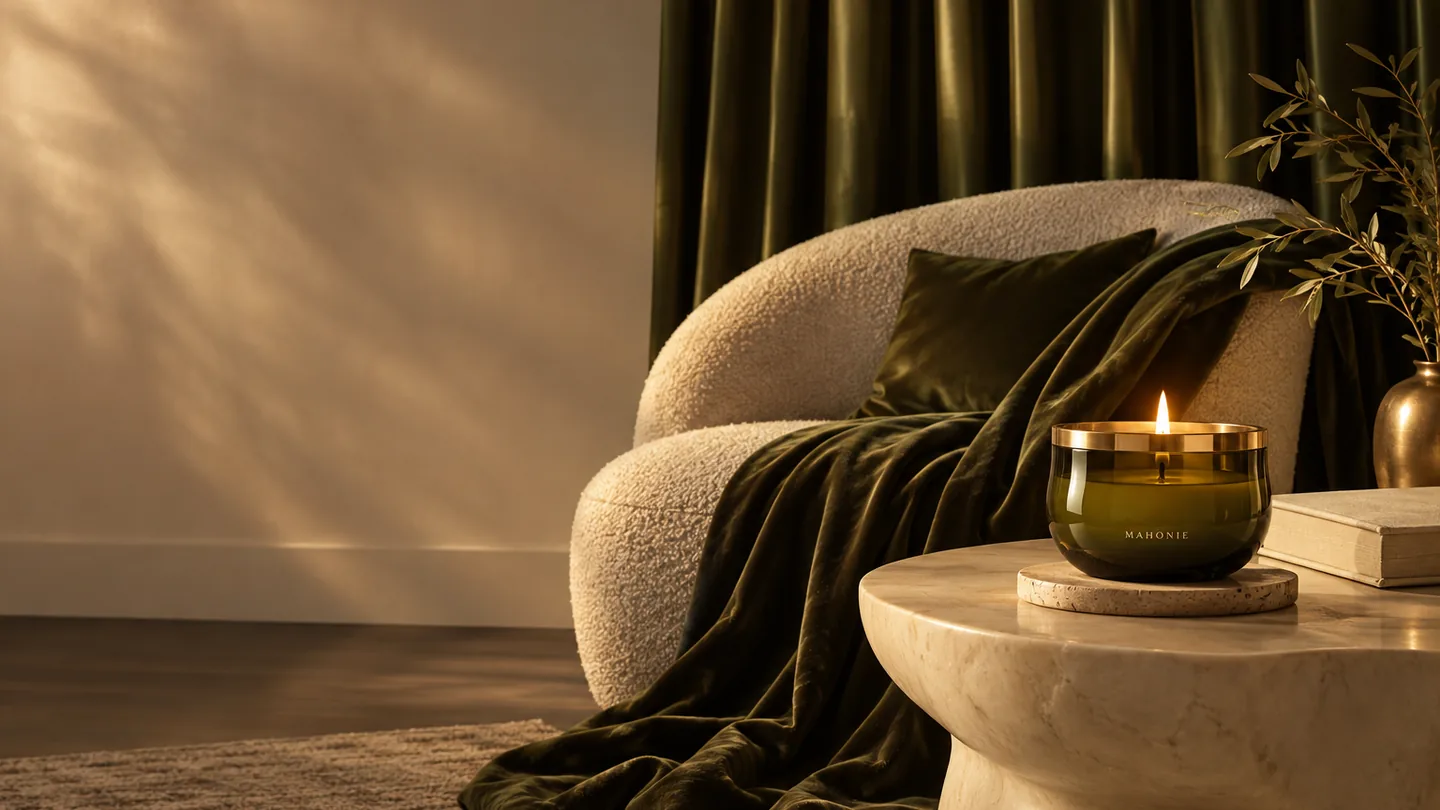
Good candle ambience comes from placement, restrained lighting and safe supervision. One well-placed candle can be enough; more flames are not always more atmospheric.
Ambiance comes from the whole setting: light, sound, seating, scent and how people feel in the space. Candles can contribute a warm visual detail, but more flames do not automatically make a room more inviting. Start with the evening you want to have, then add only what serves it.
Decide what the room needs
For conversation, keep enough ambient light to see faces and move safely. For reading, use a proper task lamp rather than relying on candlelight. For a meal, leave clear space for dishes and guests. A candle should support the activity, not become something everyone must work around.
Move everyday clutter before arranging anything. Clear surfaces often make a larger difference than adding another decorative object. You do not need to change your entire room or buy a coordinated collection for a single evening.
Use electric lighting as the foundation
A table lamp or dimmable overhead light can provide most of the illumination, with a candle adding a smaller point of interest. Avoid making a room so dark that someone cannot see a step, a pet or a glass on the floor. Battery-operated candles are useful where real flames would be unsuitable.
Choose one fragrance direction
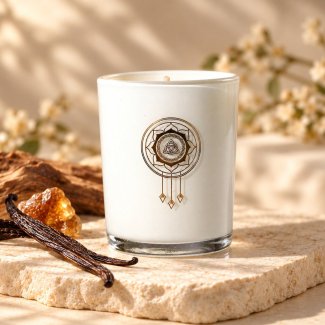
A floral, woody or sweet profile can help set a personal tone, but it does not prescribe a mood for everyone. If you enjoy warm fragrance, the Amber and Vanilla Blossom Candle is an option to consider. Check with guests first, especially if they are sensitive to fragrance.
For dinner, keep food aromas in mind and consider no added scent. Do not layer incense, a room spray and several scented candles to make the setting feel special. A quieter fragrance background is often easier to share, particularly in a compact flat.
Arrange around safe usable space
Use a stable, heat-resistant surface with suitable clearance. Keep flames away from curtains, plants, books and other flammable materials. Do not put a candle on the floor, at the edge of a table or where someone may reach across it. A decorative tray is not automatically heat-resistant or appropriate for burning.
Keep candles apart according to their care instructions; closely grouped flames can create excess heat. Do not move a candle while it is lit or while its vessel and wax are hot. If the placement is inconvenient once people arrive, extinguish it and let it cool before rearranging.
End the evening deliberately
Make extinguishing candles part of closing the room, just like switching off appliances or putting away glasses. Never leave them burning during sleep, and never assume someone else is watching them. Follow the product label for wick care, burn limits and when to stop using the candle.
Our home decor styling guide helps with room-specific placement. If you are comparing formats, read single-wick versus three-wick candles before choosing a larger candle simply for its visual impact.
Frequently asked questions
How many candles should I use for an evening?
Start with one and consider where you can safely supervise it. Add another only if each has a stable surface and appropriate clearance. The aim is comfortable light, not filling every surface. Keep normal room lighting sufficient for moving around safely.
Can I decorate around a candle with flowers or dried botanicals?
Keep combustible decorations away from the flame and vessel. Do not add petals, herbs, glitter or other materials to the wax. A separate vase or a nonflammable object at a safe distance can create a considered arrangement without altering how the candle burns.
What should I do before guests leave?
Extinguish every candle and check each wick. Let vessels cool fully before moving or covering them. Do a final room check rather than assuming a candle burned out. If hosting makes supervision difficult, choose battery lighting for the atmosphere and a separate labelled fragrance format.
How do I remove candle wax from fabric?
Extinguish the candle and let the spill cool before handling it. Check the textile’s care label and avoid rubbing liquid wax deeper into the fibres. Delicate, coloured or dry-clean-only materials need advice from a professional cleaner. Do not assume a hot iron, solvent or freezer method is suitable for every fabric. Tell the cleaner whether the wax was fragranced or coloured, since residue and dye can require different treatment.
How do I store candles in Indian summer or monsoon weather?
Use a cool, dry place away from direct sunlight and heat sources, with the appropriate lid on a fully cooled candle. Avoid a hot car, sunny window or damp storage area. Keep the packaging and care directions. If wax or the vessel changes noticeably, contact the seller before use.
Can I reuse a candle jar?
Only after it is fully cooled, safely cleaned and suitable for the intended use. Avoid boiling-water or oven hacks that can cause burns or thermal shock. Do not assume a decorative candle container is food-safe or suitable for refilling. The lowest-risk reuse is an unheated, non-food purpose after checking the material.
How do I style candlelight without placing objects near the flame?
Let the surrounding room provide the decoration. Use the colour of the wall, a distant textile or the arrangement of furniture rather than adding botanicals, ribbons or paper around a burning candle. Keep the clearances required by the product and use a stable heat-resistant surface. A restrained setting often needs fewer objects and is easier to inspect while the flame is present.
About this guide
Mahonie Journal · Reviewed 24 October 2026. Practical editorial guidance. Follow the directions supplied with your product; choose practices that suit you. Product pairings are optional.
Further reading: National Candle Association: candle safety.