At a glance
Choose wick count to suit the complete candle design and your space. Three wicks do not automatically mean three times the scent, a longer burn or better value.
A single-wick candle has one burning point; a three-wick candle has three. That visible difference matters, but it does not tell the whole story about fragrance strength, burn time or quality. The candle's wax amount, formulation, vessel and wick design work together. Compare complete products rather than choosing by wick count alone.
Why does a candle have multiple wicks?
A wick draws melted wax towards the flame, where it serves as fuel. Wider candles may use several wicks to distribute heat across the surface. The manufacturer needs to match wick number and specification to the vessel and formulation. Adding wicks yourself or lighting only selected wicks contrary to the instructions can disrupt that design.
Fragrance strength is not guaranteed
A three-wick design may create a wider melt pool and a different fragrance experience from a smaller single-wick candle. However, scent throw also depends on fragrance formulation, room size, airflow and how the product burns. A well-designed single-wick candle can suit a room better than a larger candle whose scent feels overpowering.
In a compact Indian flat, start with the people sharing the room and the ventilation available. Ceiling fans and air conditioning can affect airflow; keep flames away from direct draughts. For choosing a scent family, read our home fragrance guide.
Do three-wick candles burn faster?
More flames can consume wax differently, while a larger candle may also contain more wax. You cannot infer total duration from wick count. Compare product-specific burn-time information only when published, and note that estimates depend on use and care. Avoid assuming a three-wick candle lasts longer simply because its vessel looks larger.
Compare value using facts you actually have
Look at the stated wax quantity, dimensions, price and any supported performance information. If burn hours are not provided, do not invent a cost-per-hour comparison. A higher-priced candle may suit your decor or fragrance preference, but it is not automatically a more economical purchase.
Check your available space too. A wide vessel needs suitable clearance and a stable heat-resistant surface. A smaller candle may be easier to place, but it still needs the same attention to children, pets and nearby flammable objects.
Care follows the individual candle
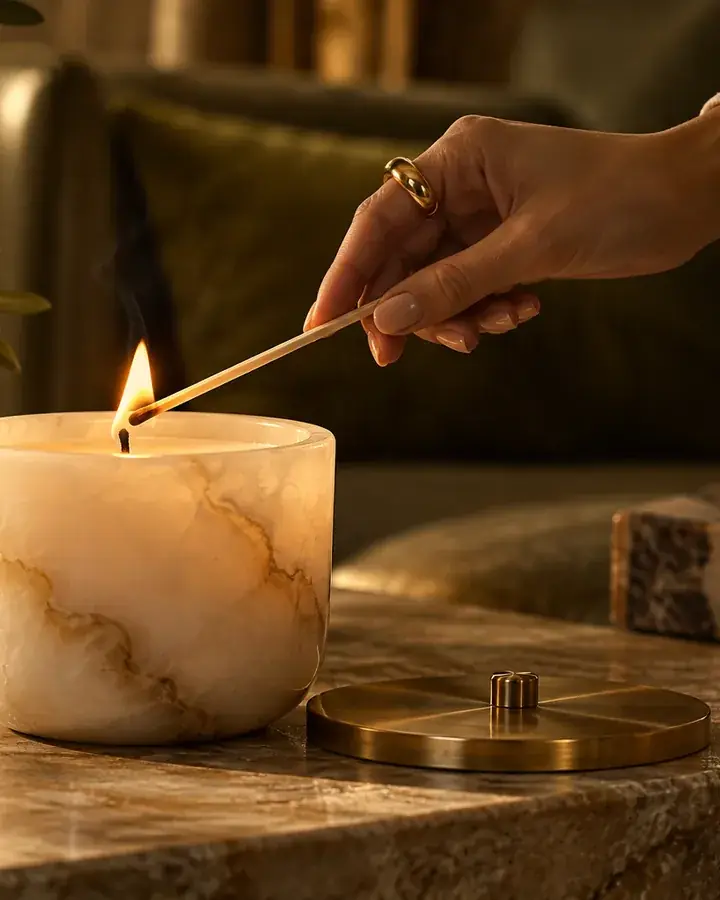
Read the label for wick trimming, maximum session length and when to stop using the remaining wax. Follow directions for lighting multiple wicks together where specified. Do not prolong a burn indefinitely to chase a perfect melt pool or move a hot vessel while rearranging decor.
Never leave a burning candle unattended or use it during sleep. Choose a battery-operated alternative if supervision is impractical. No wick count makes a candle universally smokeless or safe in every setting.
Our soy wax buying guide explains why wax labels also need careful interpretation. For placement and lighting decisions, see creating ambiance with candles. The better candle is the one whose documented details, fragrance and care requirements fit your space.
Frequently asked questions
Is a three-wick candle stronger than a single-wick candle?
A wider multi-wick candle may produce a different melt pool and fragrance experience, but wick count alone cannot predict intensity. Compare the actual vessel, fill weight and product description. Choose a format whose label and safe placement requirements suit your room.
Should I light every wick in a multi-wick candle?
Follow that candle’s directions. Multi-wick products are generally designed as a system; using only part of the intended design can create uneven melting. If a wick is damaged or behaves unusually, extinguish the candle and ask for product-specific guidance rather than improvising.
Which offers better value?
Compare the verified fill weight, estimated use duration and price, not only the number of wicks. Also consider whether you can safely accommodate the larger vessel and supervise its use. An unverified burn-time claim should not be used to calculate cost per hour.
Should I compare candle value using wick count alone?
No. Consider the actual wax quantity, vessel, fragrance, directions and whether the design suits your room and supervision needs. More wicks can change the burn pattern but do not establish better quality or lower cost per use. Compare the complete specification and avoid dividing a claimed burn time mechanically when the products have different operating limits.
About this guide
Mahonie Journal · Reviewed 24 October 2026. Practical editorial guidance. Follow the directions supplied with your product; choose practices that suit you. Product pairings are optional.
Further reading: National Candle Association: candle safety.