At a glance
Eyes-open meditation uses a soft gaze and an ordinary anchor. It is a complete practice, not a lesser version of closing your eyes.
Use the room around you when closing your eyes or focusing inward does not suit you.
Start outside
Look at a stationary object and notice its outline. Choose an ordinary detail such as a colour or an edge. Avoid bright lights, screens that strain your eyes, and flames as focus objects.
Keep the gaze comfortable
Blink and look away when needed. Let the object sit within a wider view of the room. You are resting attention, not staring without moving.
Add contact and sound
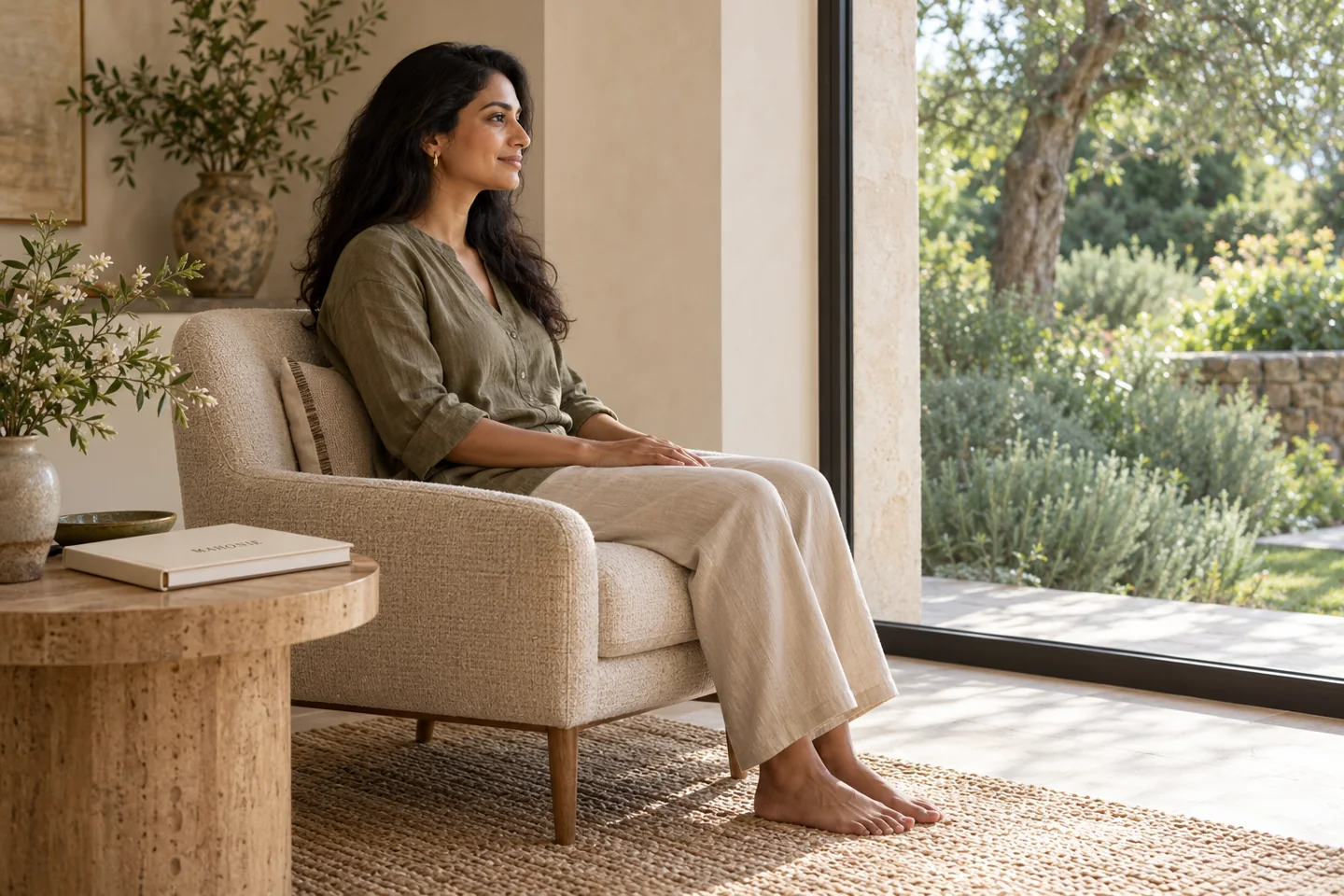
Feel the floor or chair while keeping your eyes open. Notice one sound nearby. You can move among sight, contact and sound instead of trying to stay with one sense for the whole lesson.
Choose a practical ending
Look around, decide what would be useful next, and begin that ordinary action. Opening your eyes, moving or stopping early are valid choices throughout the practice.
General wellbeing guidance from Mahonie. Adapt or stop any practice when you prefer.
Arrange a neutral field of view
Pick a still part of the room that does not require reading or monitoring: a plain wall, a quiet corner of a shelf or the surface of a table. Keep a comfortable distance and let your gaze rest naturally. You do not need to stare at one tiny point. A soft, ordinary view can include more than one shape. Move screens, moving images or a bright light out of the direct line of sight when you can, so the practice does not become a contest with avoidable distractions.
Try a short visual sequence
For a minute, notice the outline of your chosen object. Then notice the space beside it and a colour elsewhere in your view. Finally, let the whole view be present without naming every detail. When a thought takes over, recognise that you have been thinking and return to seeing. Keep blinking normally. If the eyes feel tired, look elsewhere or take a break. The purpose is to have a usable external reference while remaining aware of your surroundings, rather than to hold an unbroken gaze.
Use it in daily transitions
An eyes-open practice can suit a pause before a call or a quiet moment at a desk because there is little setup to undo. Finish by looking around the room, noticing what task comes next and closing the recording deliberately. Do not practise in a way that competes with driving, crossing a road or operating equipment. If the space is busy, shorten the exercise or postpone it. Familiarity and choice matter more than creating an ideal appearance of stillness.
Choose a simple ending
To finish, move your gaze naturally, notice the nearest doorway or window and return to the task you chose beforehand. If the exercise felt tiring, shorten it next time rather than holding the eyes open more firmly. For this exercise, comfort is more useful than an impressive duration.
Frequently asked questions
Where should I look with my eyes open?
Choose a comfortable point or object without fixing your eyes rigidly. Let the wider room remain visible and blink normally. You can lower the gaze slightly if useful, but do not hold a position that creates neck or eye strain.
What if movement in the room distracts me?
Notice that attention moved, then return to the chosen anchor. A less busy location may help, but you do not need to eliminate all movement. If the environment requires vigilance, keep that responsibility first and choose a shorter, less inward exercise.
Can I combine eyes-open practice with listening?
Yes. Keep a soft view of the room while listening to one sound, then return when attention wanders. Start without a busy sound mix so the task stays clear. Lower the recording volume enough that you can remain aware of your surroundings.
Should I stare at a candle for eyes-open meditation?
A candle is not required. A neutral still object or plain part of the room is usually simpler to arrange and does not add an open flame to supervise. Keep blinking and let the gaze be comfortable rather than fixed. If you choose any exercise involving a candle, follow fire-safety directions and do not use it when you may become sleepy or leave the room.
About this guide
Mahonie Journal · Reviewed 24 October 2026. Practical editorial guidance. Follow the directions supplied with your product; choose practices that suit you. Product pairings are optional.